
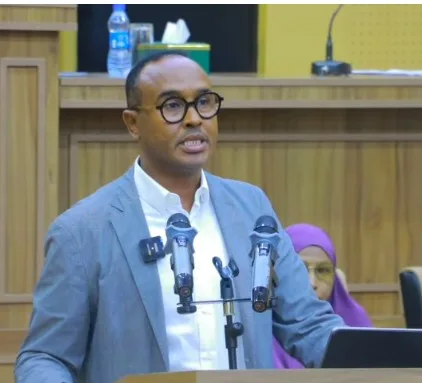
The Chairperson of the Somali Disaster Management Agency (SoDMA), Mr. Mohamud Moalin Yahye, presented a national disaster update before the Upper House of Parliament.
presence here is unusually today where we are in the highest disaster ever. that is treat to our people.
highlighting the severe humanitarian situation facing the country. He stated that nearly 4.7 million people have been affected by ongoing disasters, primarily drought.
The purpose of addressing the Senate was to deliver a clear message on the urgency of the crisis, following consultations with civil society organizations, religious and traditional leaders, and local business communities.
He emphasized that while the international community previously responded strongly to drought emergencies, the global context has changed and resources are now more constrained.
In July 2025, approximately 620,000 people were affected; by December 2025, this number rose to 970,000, and by January 2026, the affected population had increased sharply to 1.7 million people.
More than 600 water wells have dried up, and in some areas, a 200-liter barrel of water costs up to USD 50. Livestock losses have exceeded 1 million animals, with an additional 2 million animals currently at risk of starvation.
The drought has severely affected children, with 1.8 million children under the age of five suffering from malnutrition across federal member states.
The crisis is also driving cross-border displacement, with affected populations moving into Ethiopia, Kenya, and Djibouti.
Out of 90 districts nationwide, 64 districts have been significantly impacted, with all regions of Somalia experiencing drought conditions.
To sustain emergency operations through June 2026, Somalia requires more than USD 300 million.
To date, only USD 24 million has been pledged, including USD 20 million from the World Bank depending government resolution, USD 1 million from China, and additional limited contributions from other donors.
This leaves a funding gap of USD 276 million, meaning 92% of the required funding remains unmet.
The Chairperson recalled the devastating lessons of past droughts over 1 million deaths in 1992, more than 250,000 deaths in 2011, and improved prevention responses in 2017–2018 and 2022, when government-led action significantly reduced loss of life.
He concluded by stressing that unity, early action, and collective responsibility can prevent another humanitarian catastrophe, noting that history shows coordinated response saves lives.